
Biochemistry is a fundamental discipline at the interface between biology, chemistry and biotechnology. It is dedicated to the study of chemical reactions that occur in living organisms, with an emphasis on metabolic processes, the structure and function of biomolecules, and cell signalling pathways.
In addition to a wide range of Biochemistry applied to Biomedicine, Biotechnology, the Environment and Biomaterials, this master's degree offers specialised training in Molecular Biophysics, Structural Biology and Analytical Biochemistry.
Therefore, this master's degree strengthens skills in the analysis, characterisation and development of new biochemical technologies and their application in health, the food industry and environmental biotechnology.
The Master's in Biochemistry is a response to the growing need to train qualified human resources, driven by the recent development of companies in the Biotechnology, Pharmaceutical and Life Sciences areas, both in Portugal and in Europe.
Applications 2025/26
1st Phase: FEB. 3rd to Mar. 22nd
2nd Phase: Jun. 2nd to Jul. 18th
3rd Phase: SEPT. 1 to 5
Vacancies: 10
Duration: 2 years (120 ECTS)
Format: Face-to-face / Daytime
Language: Portuguese / English
Course Coordinator: Sofia Pauleta, mbq.coordenador@fct.unl.pt
Academic division: mestrados@fct.unl.pt
The Master's programme consists of 1 academic year followed by 1 year for the completion of a thesis. During the 1st academic year, 36 ECTS are taken in compulsory courses in Biochemistry and Biology, and 24 ECTS in optional courses in complementary areas such as Omics, Computational Biology, Biophysical and Biochemical Methods. Two-thirds of these courses have a practical component, and in the remainder courses group work is carried out, papers presented and case studies discussed.

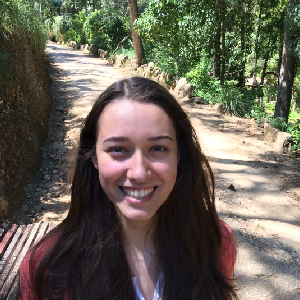
2023/2024 PhD student
I have been at NOVA FCT since my Bachelor’s degree in Biochemistry. The Master’s in Biochemistry captivated me due to its strong focus on practical classes. The diverse curricular units gave me the opportunity to choose the topics I was most passionate about. I highly recommend the Master’s for its versatility and challenging laboratory component, which provided me with a solid foundation to pursue a PhD in Biotechnology, also at NOVA FCT.


Tuition fee - Portuguese students: 1250€ / year
Tuition fee - Foreign students: 7000€ / year
Accepted candidates will have to pay (within a maximum of 7 consecutive days from the date of placement) a non-refundable fee of 100 euros, which will be deducted from the total tuition fee after enrolment.
Failure to pay by this deadline will result in the automatic exclusion of the candidate. No exceptions or late payments will be considered. Any payment made after the deadline will not be refunded and the candidate will remain excluded.
The NOVA University Lisbon reinforces its commitment to equity in higher education by awarding scholarships that promote inclusion and equal opportunities.
More information here.
The Department of Chemistry (DQ) is a teaching and research unit of NOVA FCT dedicated to the quality of teaching, the progress of research and the provision of specialised services to the community in the fundamental areas of Biochemistry and Biophysics, Chemistry and Chemical Engineering.
More info